Chassis welding vs replacing a chassis: which makes sense?
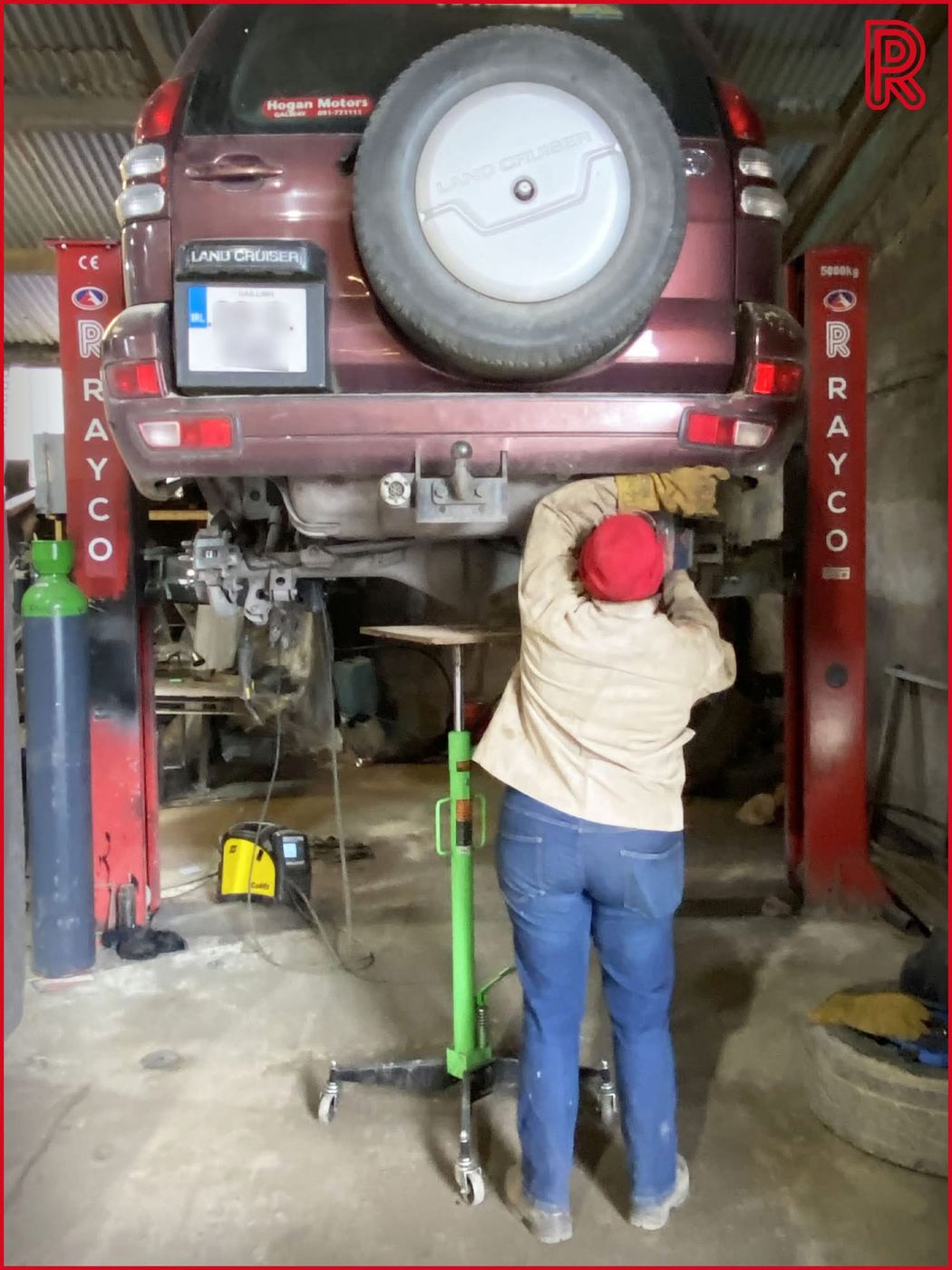
Welding repairs individual corroded sections; replacement swaps the entire frame. For most vehicles on Irish roads, section welding is the sensible option — replacement only starts to make sense when corrosion runs the full length of the rails and the vehicle is worth the labour of a full swap.
What section welding involves
The rotten area is cut out, a new section is fabricated in matching gauge and profile, and it is welded in, sealed, painted and coated. The rest of the chassis is left alone. Cost scales with how many sections need doing and how accessible they are.
What a full chassis replacement involves
The body, drivetrain, suspension, brake lines, fuel lines and wiring all have to come off the old frame and go back onto the new one. It is a large job in labour terms, and it only stacks up where a suitable replacement frame is available and the vehicle justifies it.
How to decide
- Corrosion in two or three identifiable sections — weld them
- Multiple outriggers and one crossmember gone, rails otherwise solid — weld them
- Perforation along most of the rail length — replacement becomes the discussion
- Vehicle value low relative to the labour involved — neither may be worth it
The middle option: restoration
Between the two sits a full chassis restoration: the whole underside cleaned back, every failed section repaired in one visit and the lot protected. For 4x4s and vehicles being kept long term, that is often better value than repairing one area every winter.
We will tell you honestly which category your vehicle falls into. Send photos to 087 919 2193.